Why do two hydrovac loads need different amounts of polymer?
The water-to-soil ratio and soil type change from job to job. A wet, clay-rich load needs more than a sandy load that has already dropped most of its solids.


Thicken watery hydrovac loads so they can be tipped, stockpiled and hauled without decanting a river of slurry.
Non-destructive digging uses a lot of water, and most of it comes back in the tank. AuraChem matches a grade to the soils and water you usually dig in and helps decide where in your process the polymer goes in.
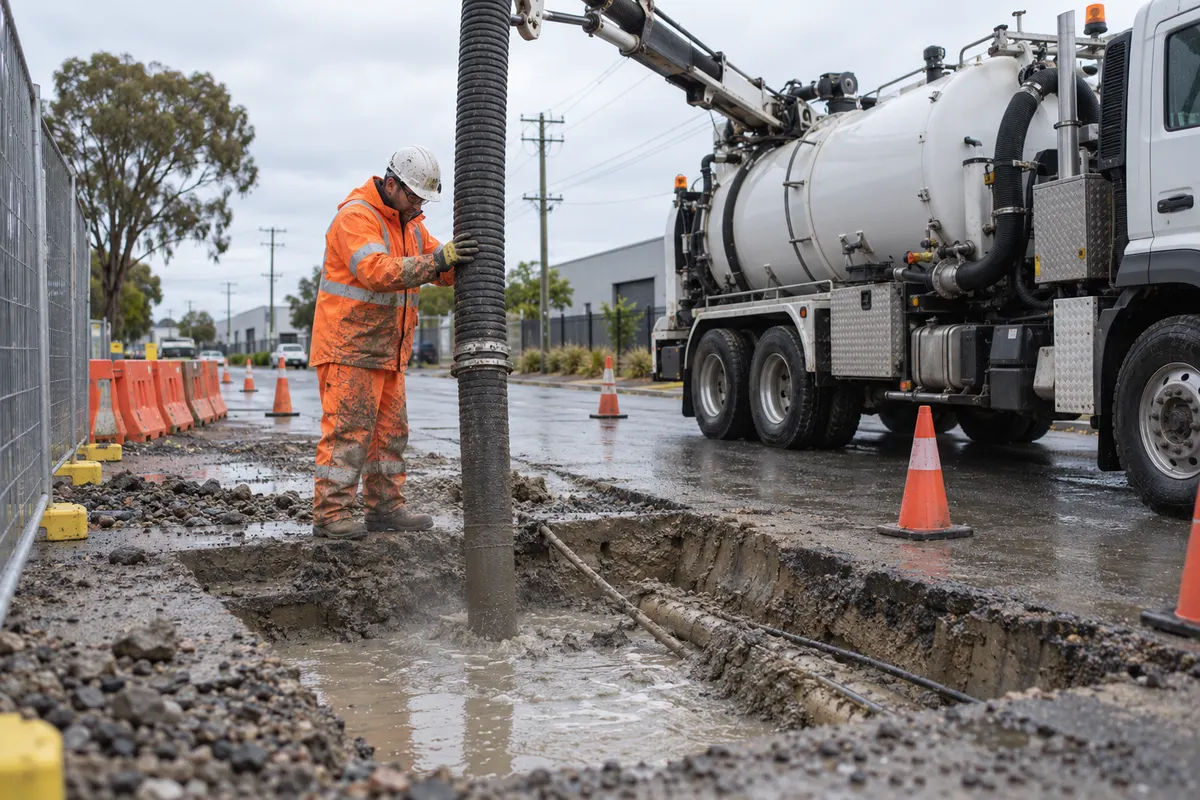
Hydro excavation breaks up soil with pressurised water and vacuums both into a debris tank, so a large share of every load is wash water. In transit the soil drops into a dense layer beneath free water, and a full tank ends up behaving like two different materials when it is emptied.
Clay soils stay suspended and soupy; sandy soils settle quickly and leave clear water on top. Jobs near the coast, or in areas with saline groundwater, add dissolved salt to the mix.
Polymer can go into the debris tank before the truck travels, into a receiving pit or tip-off bay at the depot, or into a bin after discharge. Treating in the tank stops the load sloshing on the road but makes mixing and emptying harder; treating at a bay is easier to control but needs somewhere to tip. The right point depends on your trucks, your depot and where the waste goes next.
Hydrovac slurry is close to the ideal case for a superabsorbent: plenty of free water and relatively little additive chemistry. A small addition captures that water as gel and turns a pumpable slurry into a thick paste or crumb that stays where it is tipped.
Because the water is free rather than bound up in clay or mud polymers, the response is usually quick, and far less material goes in than when the same load is bulked out with sawdust, sand or dry soil.
These are potential operational benefits subject to material testing and field or production validation.
Loads stop sloshing, which helps on the road and at tip-off
Much less volume added than sawdust, sand or soil bulking
Treated slurry can be stockpiled instead of held in ponds
Crews can adjust the dose load by load
Testing on loads from your usual soils gives a starting dose per tank, the time taken to thicken and a description of the treated material. It can also give crews a quick field check, such as how much free water should remain after mixing, so they can top up the dose when a load is wetter than usual.
The water-to-soil ratio and soil type change from job to job. A wet, clay-rich load needs more than a sandy load that has already dropped most of its solids.
It can, if the load can still be mixed and safely discharged. Gelled material may not empty easily from some tanks, so many operators treat at tip-off instead.
Much less than sawdust or soil bulking, because only a small amount of polymer is added. The exact increase depends on the dose your loads need.
The treatment is the same, but the waste may need sampling and a specific receiving facility. Thickening it does not change the contaminants it contains.

HDD and piling crews generate bentonite mud next to hydrovac slurry; the mud additives make it a harder stream to treat.
Relevant Products
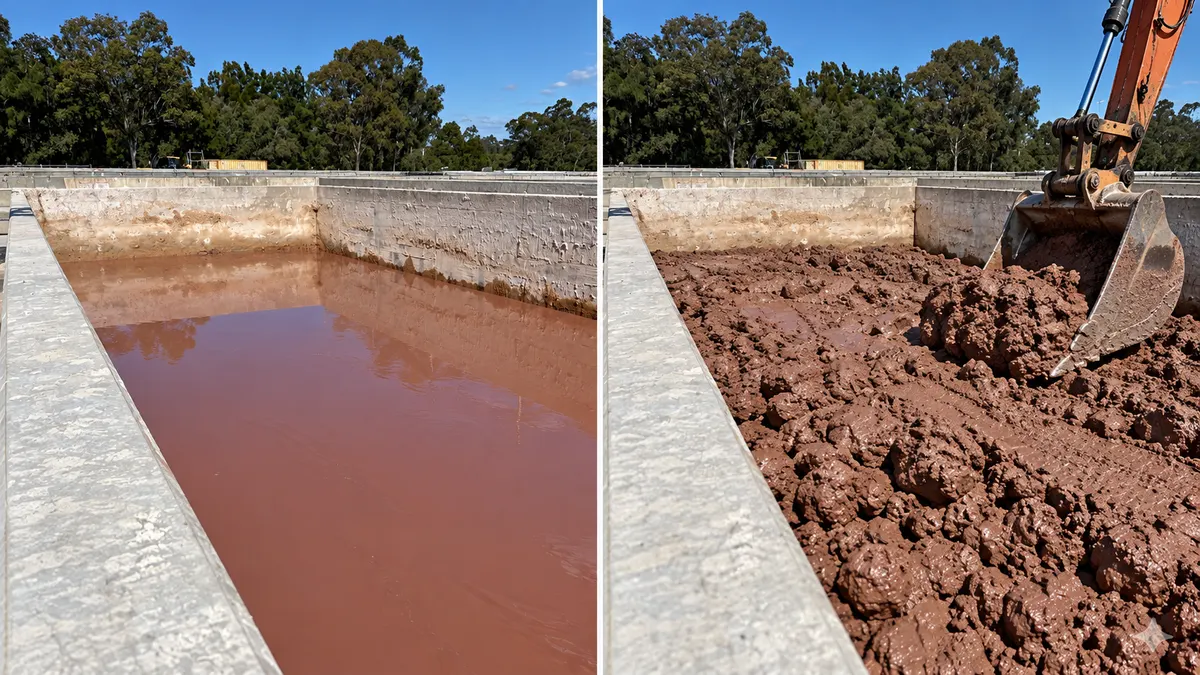
Wet excavation muck on building sites is the same soil-and-water problem, often with cement added.
Relevant Products
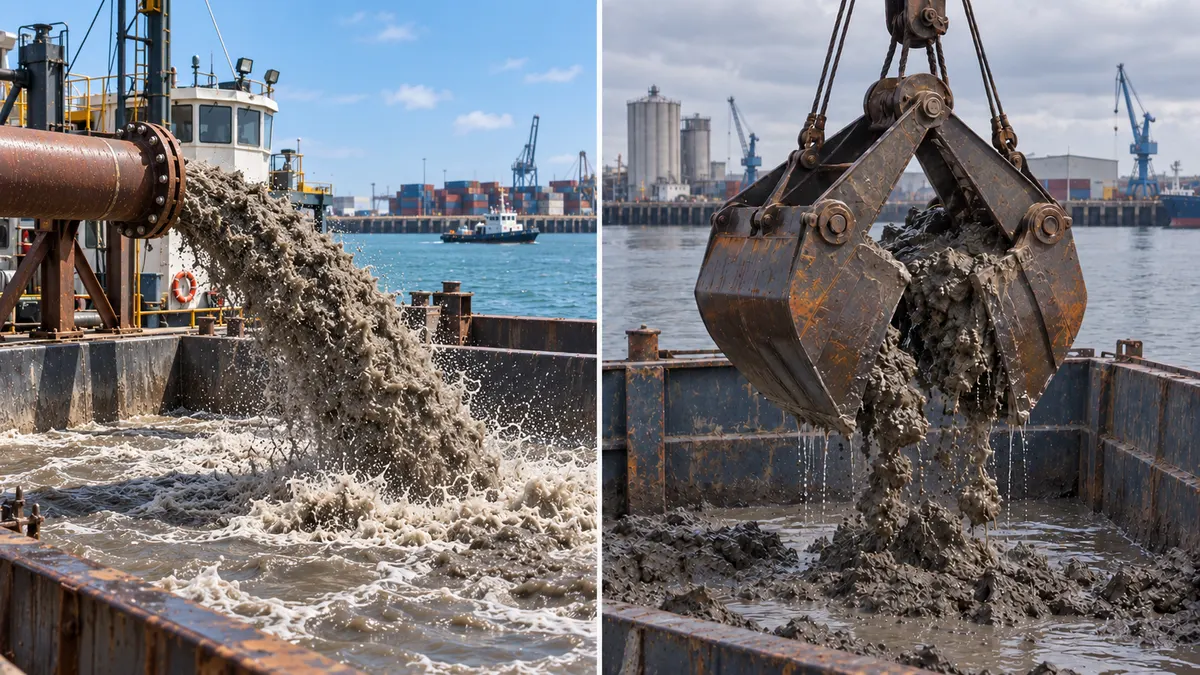
Fine silt and sand carrying entrained water, at much larger scale and often in salt water.
Relevant Products
Send us slurry from your most common dig and we will work out a dose per tank and a simple field check for your crews.